Resources
Places to learn:
Three Currents Martial Arts


Tacoma Tai Chi and Qigong Wellness Center


William C C Chen
William C C Chen Online


Content Galaxy - streaming video & digital downloads
Content Galaxy enables publishers to combine premium videos into affordable channels and pay providers and affiliates based on actual subscriber usage.

Books to read:
Brain Aerobics of Tai Chi Chuan
The slow motion of Tai Chi is a brain aerobic exercise that deeply affects the neurological function of the brain. Any mental activity or physical workout boosts the oxygen level in the blood to improve the health of brain tissues, stimulating new brain cell growth and helping to turn inactive cells into active ones. Keeping brain cells and tissues healthy enhances neurological function. This is the objective of this aerobic exercise for the brain. What is good for the brain is good for the body. The Brain connection of the merging Qi and the Feeling Yi is like an electric wire. Energy Qi in the body is the positive “hot” wire. Thinking mind of the Feeling Yi of the brain is a negative “soft” wire. This dual polarity must be unified to produce direct electricity. Qi 氣 and Feeling Yi generate the dynamic outgoing energy for physical actions. Yi is an infinite source of force that integrates the soul with human Willpower 毅力. It is like the spiritual soul 魂 energy, also called “Shen” 神.
Qi is our human mobility energy and the intentional feeling of Yi is an inspiring energy. Both are required in our normal life, we can’t live with one without the other. The stockpile of Qi resides in the meridians and requires Yi to amplify it for physical action.
Qi is the optimal power for an internal martial artist. It is potential energy fuel that is easily ignited into explosive force for a quick punch or kick. The Feeling Yi triggers the Qi, which in turn generates the Willpower of Shen, the power of the spiritual Soul (or immortal Soul).
To generate the power of mastery, we think and feel it (Yi), we will it, and we create a huge amount of fuel to ignite Qi like gasoline to produce an explosive force. Shen contributes a massive amount of oxygen which combines with the “human fuel” of Qi to ignite a super explosive force.
Therefore, a devoted martial artist’s body strength is supported and sustained by the resilient Willpower of Shen and Feeling Yi from the brain. Feeling Yi is the best generator of Qi for physical action. The source of the connection between the three (Yi, Qi, and Shen) is the best human treasury. These three essential elements are the central emphasis and application of Chinese martial artists. In addition, they constitute the basis for human productivity, enabling us to accomplish our daily obligations to society. Millions of people throughout the world have been living long, productive lives from the daily practice of Tai Chi Chuan. The Brain Aerobics of Tai Chi Chuan is a great contribution to our well-being, making the brain strong and healthy. What is good for the brain is good for the body.
What is good for the body is good for the brain.
William C C Chen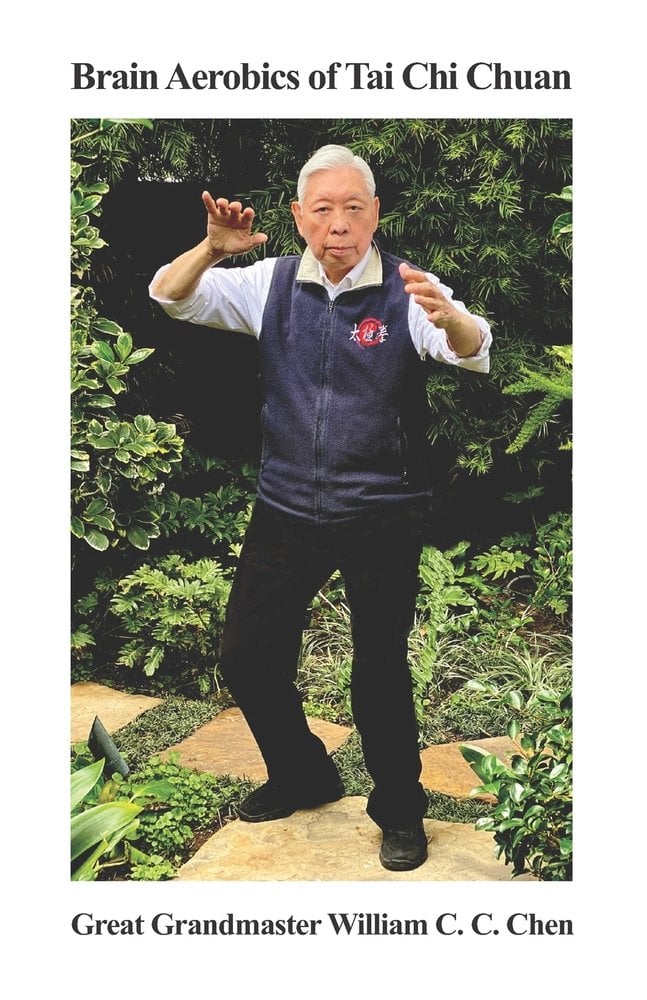
The Taijiquan Classics: An Annotated Translation
Along with Chinese art, medicine, and philosophy, taijiquan has left the confines of its original culture, and offers health, relaxation, and a method of self-defense to people around the globe. Using the early texts now known as The Taijiquan Classics which have served as a touchstone for t’ai chi practitioners for 150 years, this book explores the fundamental ideas and what they mean to practitioners, students, and scholars. It also incorporates newly discovered sources that address the history of taijiquan and newly translated commentaries by Chen Weiming.
 Barbara Davis and Chen Wei-Ming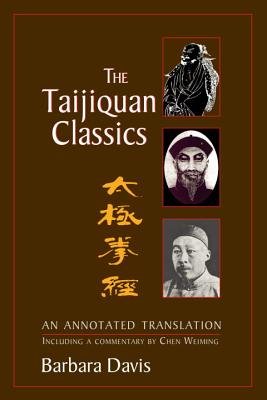
Tai CHI Concepts and Experiments: Hidden Strength, Natural Movement, and Timing
The Tai Chi Concepts and Experiments book clarifies and makes accessible critical aspects of the art that only a small number of high-level practitioners currently understand and manifest.
Numerous step-by-step experiments are provided for readers to experience and perfect these critical tai chi aspects.
Contents include:
- The meaning and importance of releasing tension in movement for stability, health, and spirituality.
- The differences between contractive and expansive strength including a promising mechanism for the nature of expansive strength.
- Numerous experiments for readers to recognize and experience expansive strength and to confirm that they have achieved it.
- Elucidation of famous master’s sayings on mind, strength, and chi.
- Health and martial advantages of expansion over contraction in tai chi.
- Protocols using expansion including those for helping an excess curvature of the upper and lower spine and for relieving plantar fasciitis.
- Quotes from the classics and how they confirm the interpretations of the principles of tai chi.
- How to achieve optimal balance through an understanding of physical, anatomical, physiological, and mental factors.
- A detailed analysis of “rooting and redirecting” including physical and internal aspects.
- Understanding natural movement from physical, philosophical, health, and martial points of view.
This interdisciplinary book utilizes, elementary physics, physiology, anatomy, psychology, and spirituality. It contains detailed analyses and explanations for achieving internal, expansive strength, known as nei jin, and for attaining optimal timing and natural movement.
Robert Chuckrow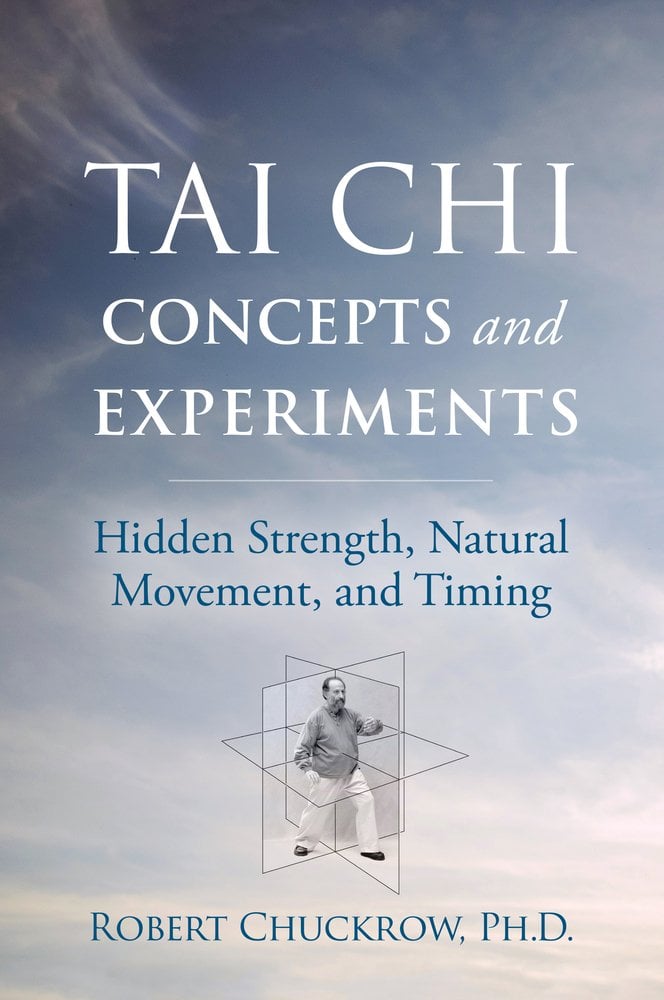
The Essence and Applications of Taijiquan
Martial arts master Yang Chengfu’s seminal work on the techniques and applications of Yang-style taijiquan—now available to Western practitioners for the first time
 
The publication in 1934 of Yang Chengfu’s book, The Essence and Applications of Taijiquan (Taijiquan Tiyong Quanshu) marked a milestone in the modern evolution of the art of taijiquan. Using what is best-termed demonstration narrative, the author presents form postures and suggested applications from his own perspective, as he performed them. This methodology renders Yang Chengfu’s direct, hands-on teaching of the art with such immediacy and liveliness that the reader experiences the master’s teaching much as his students did.
 
This English translation finally makes Yang Chengfu’s classic work available to taijiquan enthusiasts in the West. It includes notes and commentary that clarify the author’s frequent classical and literary turns of phrase and elucidate the philosophical and political underpinnings that shape the text. The translator investigates and compares several early taijiquan books in order to help explain the roles played by two of Yang Chengfu’s students, Dong Yingjie and Zheng Manqing, in bringing Yang Chengfu’s words and teachings into print. Serious students of taijiquan, and those wishing to deepen their knowledge of taijiquan history and theory, will find this seminal work indispensable to their study and practice.
Yang Chengfu and Louis Swaim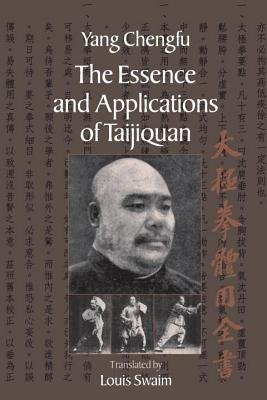
Tai Chi Push Hands: The Martial Foundation of Tai Chi Chuan
Push Hands is the “other” part of tai chi that makes your practice a true living art
Tai chi push hands practice is a necessary next step for tai chi practitioners who wish to make their art come alive. Push hands practice requires two people to engage in a variety of “light touch” moving and walking routines. By practicing these movements, practitioners begin to develop tai chi’s sensing, listening, and yielding skills. Combined, these skills are the first step for developing your tai chi as a martial art.
The Dao De Jing classic reminds us that knowing others (an opponent) is important for knowing ourselves. By develop tai chi push hand skills, one begins to obtain a profound sense of feeling of your own body and mind. This ability aids greatly in regulating and controlling body, balance, health, perseverance, compassion, and overall spirit.
It is no mistake that tai chi offers a lifetime of continued learning and progress; the goal is a deep understanding of yourself and your role in nature.
In this book, you will learn
- The theory of tai chi pushing hands
- Tai chi qigong foundation practice
- Tai chi jing (power) practice
- Two-person stationary push hands practice
- Two-person moving push hands practice
- Tai chi rollback and press push hands practice
- International standard push hands routine
- Two-person free style push hands
- Martial art applications in tai chi push hands practice
Dr. Yang reminds us “tai chi chuan was created based on the martial applications which were used for self-defense. Every movement of tai chi chuan has its unique martial purpose. Without this martial root, tai chi chuan practice will limited to a dance, lacking a deeper meaning or a deeper feeling.”
This book is complemented by two companion videos sold separately.
- Tai Chi Pushing Hands 1 - Yang Style Single and Double Pushing Hands
- Tai Chi Pushing Hands 2 - Yang Style Single and Double Pushing Hands
Available wherever DVD and Streaming videos are sold.
Dr. Jwing-Ming Yang and David W. Grantham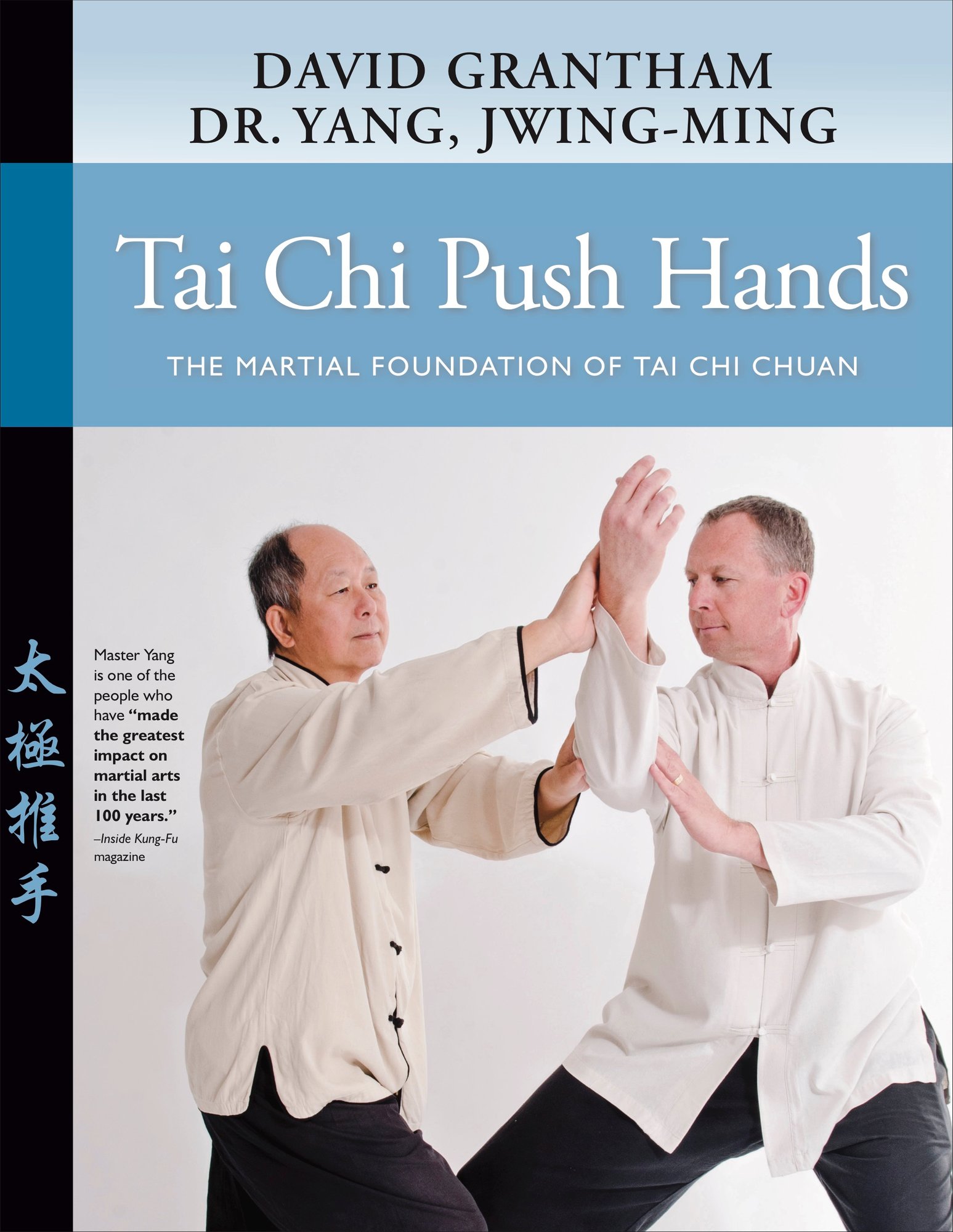
Cheng Tzu’s Thirteen Treatises on T’ai Chi Ch’uan
Millions of people worldwide practice t’ai chi, the most popular form of which was codified beginning in the 1960s by Cheng Man Ch’ing. In this scholarly yet practical book, Professor Cheng shows precisely how the postures and moves of t’ai chi work, with examples from anatomy and physics, both internally as energetic principles and externally on opponents. He clarifies the spheres, triangles, and centripetal and centrifugal forces within physical exchanges such as push-hands. Contrasting Western and Chinese techniques of healing, he also explores the relationships of organs to one another in pathology and the necessary dynamics of treatment. Professor Cheng explains how the practitioner may serve as his or her own doctor and, likewise, as the physician or trainer of an attacker. The martial arts, he says, are not a special case of unusual power, simply an aspect of adapting natural and cosmic law to circumstance. This edition of the classic text contains 13 major essays; oral secrets from Cheng’s teacher Yang Cheng’fu; a Q&A with commentary on martial arts classics; the author’s application and functions of each of the 37 postures of the short form, with the original photographs of him as a young man; two prefaces; and much more.
Cheng Man-ch’ing á and Benjamin Pang Jeng Lo and Martin Inn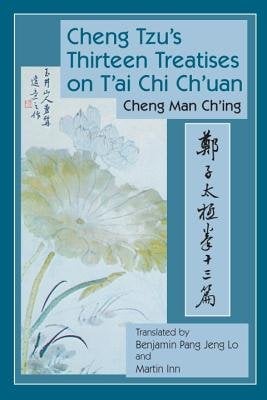
Podcasts:
The Neijiaquan Podcast
Welcome to the Neijiaquan Podcast with Jess O’brien and Isaac Kamins. Our goal is to document and present the history of training chi gung and internal martial arts. We want to help keep these arts alive and give our listeners a taste of the experience of


The Tai Chi Notebook
Reflections on Tai Chi, Xing Yi, Brazilian Jiu Jitsu, and martial arts studies
 Tai Chi Notebook